
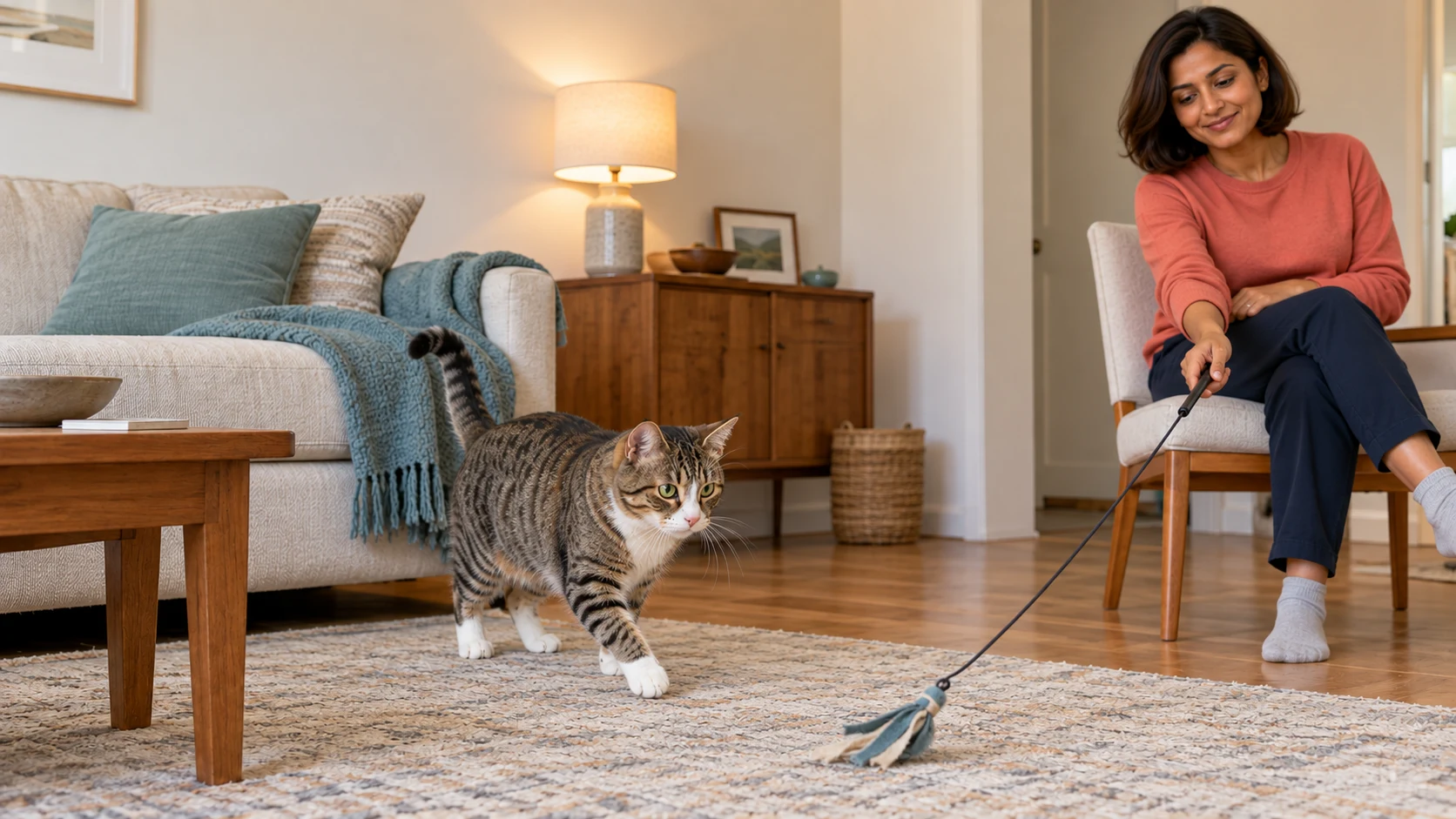
You can learn something useful about your cat through one small, voluntary experience. Begin with what they choose, keep the setup manageable, and leave room to stop.
Check the toy and the space
Choose an intact wand toy made for cats and check its cord, joins and lure. Put damaged toys away. Clear a small non-slip floor area so your cat can watch, join or leave. Keep other pets separate for this game. Choose a time when your cat is awake and not busy with something else.
Keep fingers and feet out of the game. Use a toy that puts distance between paws and hands. Stay with wand and string toys throughout play.
Move the toy, then wait
From a comfortable distance, move the lure a short way along the floor away from your cat, then pause. Give them time to watch or approach. Try a few slow movements for up to a minute. If they stay interested, try one small change, such as a brief stop behind a sturdy object.
Do not wave the toy into their face or demand a chase. Watching is a response too. Keep movement within your cat’s comfortable reach and let them catch the lure at times rather than pulling it away every time.
Finish with a catch and a pause
If your cat joins in, let them catch the lure and keep it still. End the short game while it is manageable; stop sooner if they leave, tense up or seem uncomfortable. Once they release it, store the whole wand safely out of reach. Never tug it from their mouth.
You made time for a choice. Note one thing: “Watched the slow movement,” “followed the pause,” or “did not join today.” Try that starting movement another time. Stop play and contact a vet immediately if your cat has trouble breathing. Ask your vet about pain or a sudden loss of interest in play.
A small invitation, not a performance
A cat can spend a long time looking at a toy before making a move. That does not tell us exactly what they feel, and it is not a reason to make the game louder or faster. For this first activity, your job is simply to offer a safe opportunity and notice the response. You are looking for one useful detail about this individual, rather than a particular number of pounces.
Play can give cats an outlet for stalking, chasing and catching. It can also give you an enjoyable way to spend time together. A familiar toy might interest your cat on one occasion and not another. Keep your interpretation modest: a choice today is information about today, rather than a permanent description of their personality. You can begin with a movement they previously followed and still leave them free to choose differently.
Make the setup easy to leave
Choose a small space where you can see the whole game and your cat has a clear way out. Avoid turning a doorway or shared route into a play station. If another pet is present, arrange separate spaces before you begin. This makes it easier to observe one cat's response without asking them to compete for access to the toy.
Think about your position too. Sit or stand where you can move the lure along the floor without reaching over your cat. You do not need to pick them up, bring them to a starting line or hold them beside the toy. Waiting for a suitable moment is part of the activity. If they are sleeping, eating or occupied elsewhere, put the toy away and choose another time.
Change one thing, then notice
Suppose your cat watches a slow movement but does not follow. Pause rather than immediately switching through several toys. You might next try a short movement away from them, followed by another pause. If they approach, keep the game within a comfortable reach. These are examples to explore, not a test or a sequence every cat must complete.
A simple description can help you remember what actually happened. “Watched when the toy stopped” is more useful than “was lazy.” “Followed a short movement beside the chair” is more useful than “loved everything.” Describe what you saw without deciding what your cat ought to have done. This gives you a calmer starting point next time and avoids turning ordinary variation into a behavior problem.
Let the ending be part of the game
A short game can be enough. There is no need to keep going until your cat appears tired. If they join in, include opportunities to catch the lure, then allow a pause. Keep the toy still while they hold it; do not pull it from their mouth. Once they release it, put the whole wand somewhere they cannot reach it without you.
Check the toy again before its next use. A cord, loose attachment or worn join can change during play. Supervision does not make a damaged toy suitable. Remove it from use and choose an intact cat toy instead. If you are unsure whether a toy is appropriate for your cat, ask your veterinary team. The aim is a manageable shared moment with room for choice, including the choice to finish.
When to get professional help
Stop the game and contact a veterinarian immediately if your cat is struggling to breathe. Ask your vet about signs of pain or a sudden loss of interest in play. Persistent fear, distress or unsafe interactions deserve individual veterinary and qualified behavior support; a new toy is not a diagnosis or treatment.
The takeaway: make one safe invitation, notice what your cat chooses, and build from that information at their pace.
keep learning with Pawaily ♡
Get practical pet guidance
Explore kind, practical learning and everyday discoveries with Pawaily.
Create account