
A home observation, not a home diagnosis
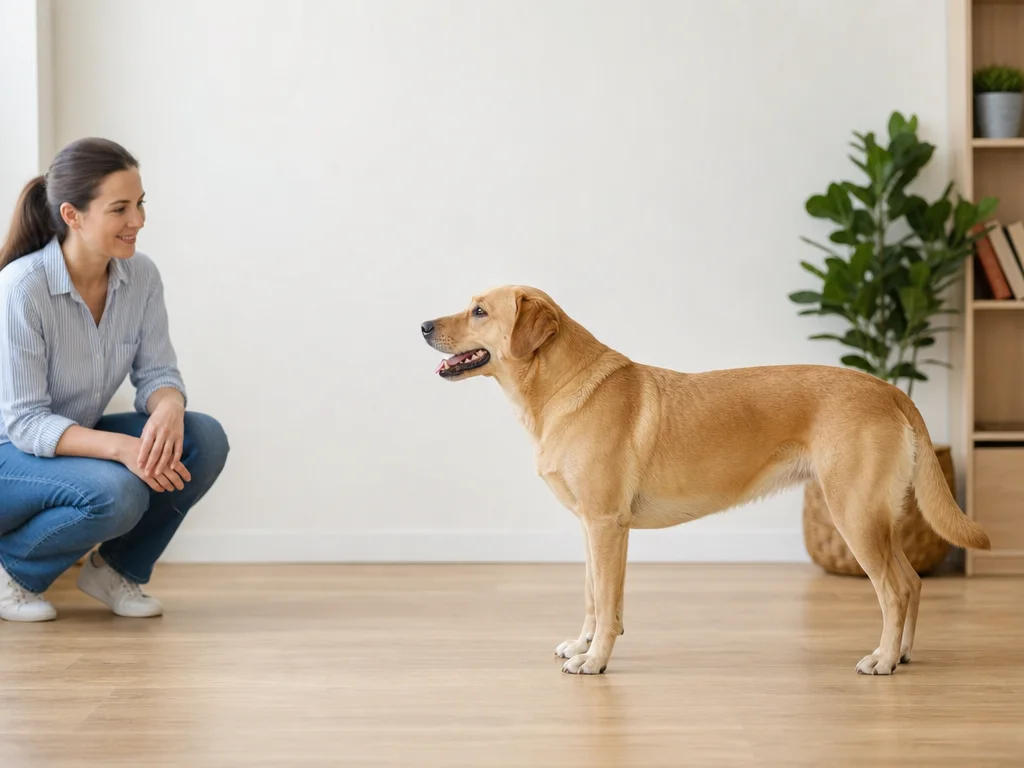
You know your dog in the small, ordinary moments: the stretch after a nap, the wag at the door, the relaxed stand while waiting for dinner. Those moments can also give you a useful general view of their body shape. A body-condition observation is a way to notice three landmarks—ribs, waist, and abdominal tuck—and to bring a clear question to your vet when something seems different.
It is not a diagnosis. It cannot tell you why a dog’s body looks a certain way, whether a change is important, or what food, activity, or care plan an individual dog needs. Dogs differ in age, build, coat, posture, reproductive status, mobility, and health history. A thick coat can hide shape; a naturally lean or broad build can make comparison difficult. Your veterinary team knows the context that a chart and a quick look at home cannot provide.
The World Small Animal Veterinary Association (WSAVA) offers a dog body-condition chart as a tool for veterinary teams to assess fat stores. It uses both looking and gentle feeling, rather than body weight alone. Use it here as a conversation starter, not as an instruction to assign your dog a number or to make a feeding decision by yourself.
Choose a calm, ordinary moment
Pick a time when your dog is comfortable, awake, and standing on a level floor. There is no need to pose them, hold them still, or turn the check into a repeated inspection. A naturally standing dog gives you a more honest view than one stretched forward for a treat or curled tightly after a walk.
Good light helps, particularly for a dark or dense coat. If the coat is long or especially fluffy, the outline may look different from one day to the next. A clear side view and a view from above are more useful than a photo taken from very close up.
Keep the experience low-key. Stop if your dog moves away; this is not a test of cooperation. You can simply observe from a distance and bring handling questions to a vet.
Notice the overall picture occasionally in similar circumstances. The useful result is being able to tell your veterinary team, “This looks different from usual,” and when you first saw it.
First, observe the ribs gently
Start with your eyes. From the side, notice whether the chest and rib area seem broadly in proportion with the rest of your dog’s outline. Do not expect every dog’s ribs to look the same, and do not use visible ribs alone to decide that anything is wrong. Coat length, lighting, movement, and individual structure all change what you see.
If your dog welcomes touch, you may place a flat hand lightly along the side of the rib cage. The purpose is not to press, poke, count ribs, or prove a score. It is simply to notice whether the ribs feel easy to find beneath the covering tissues or less clear than you expected. The WSAVA chart includes gentle palpation because sight alone can be misleading.
Keep the touch brief and kind. Avoid pressing into the abdomen, squeezing the chest, or repeating the check until you feel certain. If your dog flinches, tenses, turns away, growls, or seems uncomfortable, stop. Do not interpret that response at home. Make a note of what happened and contact your vet if the response is new, repeated, or concerns you.
Then look for a waist from above
When your dog is standing naturally, look down from above the back and shoulders. The waist is the area behind the ribs and before the hips. In the middle of the WSAVA chart, the waist is described as visible from above. That description is a reference point, not a body ideal to impose on every dog.
Some dogs have coats, shapes, or movement patterns that make a waist hard to see. A puppy that is still growing, a dog with a compact build, or a dog with a heavy coat may not look like an illustration. Avoid comparing your dog with a social-media image, another breed, or a memory from a different life stage. Instead, ask: does this outline feel familiar for my dog, and am I seeing a gradual or sudden difference?
A simple note can be more helpful than a conclusion: “The area behind the ribs looked less defined than I remember,” or “I am not sure because the coat is thick.” If you want to take a photo for a veterinary visit, ask whether your clinic finds that useful and follow their guidance. Do not rely on a single angle, edited image, or home score as a substitute for an examination.
Notice the abdominal tuck from the side
Now view your dog from the side while they stand at ease. The abdominal tuck is the upward line of the belly behind the rib cage. WSAVA’s dog chart includes this side-view landmark along with ribs and waist. It can be easier to notice when the dog is relaxed than when they are sitting, stretching, or holding their breath.
This is another place to observe rather than label. Belly shape can vary with a full meal, posture, coat, age, and individual factors. A tucked-looking abdomen does not confirm a particular condition, and a rounded-looking abdomen does not explain itself. Note the date, view, and whether it looks different from your dog’s usual shape.
Because the three landmarks work together, avoid making a decision from only one. A waist that is difficult to see may be a coat issue. Ribs that feel different may need professional interpretation. The useful next step is a conversation with a vet, who can assess the whole dog rather than a single feature.
Put the observation in context
Body condition is one part of a wider veterinary assessment. The WSAVA nutrition resources distinguish body condition, which considers fat stores, from muscle condition. That is an important limit: a familiar-looking outline does not tell you everything about a dog’s muscle or overall health, and a body-condition observation cannot replace routine veterinary care.
If you want to share what you noticed, keep it factual. You might write down when you first saw the change, whether it seems to be continuing, and which view made you pause. Mention any relevant life-stage or routine changes to the vet, but resist the urge to connect the dots yourself. This page does not offer calorie targets, portions, food switches, exercise plans, supplements, or treatment steps. Those choices should be individualized with a vet who can evaluate your dog.
The American Veterinary Medical Association’s body-conditioning material shows body shape on a range, not as an appearance contest. Your dog does not need to resemble a chart image to deserve thoughtful care. The goal is an informed, nonjudgmental check-in and a good question for the professionals who know your dog.
When to get professional help
Contact your vet if you notice a new or ongoing change in your dog’s body shape, a change that seems rapid, discomfort with gentle touch, or anything else that worries you. State observations are not a diagnosis, and it is safest to let a vet decide whether an examination is needed and what the next step should be.
Bring the WSAVA chart or your brief notes to the appointment if that helps you explain what you saw. Ask the veterinary team to show you how they assess ribs, waist, and abdominal tuck on your own dog. They can explain the limits of a body-condition score and provide guidance tailored to your dog’s age, build, history, and current needs. If your dog cannot be handled comfortably, do not force the observation; call the clinic for advice on a low-stress way to proceed.
Sources and further reading
- WSAVA: Body Condition Score—Dog — a veterinary body-condition chart that uses ribs, waist, and abdominal tuck as reference landmarks.
- WSAVA: Global Nutrition Guidelines — guidance and toolkit context for veterinary nutritional assessment, including dog body-condition tools.
- American Veterinary Medical Association: Pet Body Conditioning Scoring — AVMA educational material on discussing body condition with a vet.
keep learning with Pawaily ♡
Get practical pet guidance
Short, evidence-informed ideas for learning, health, grooming, nutrition, and everyday care.