
The short answer
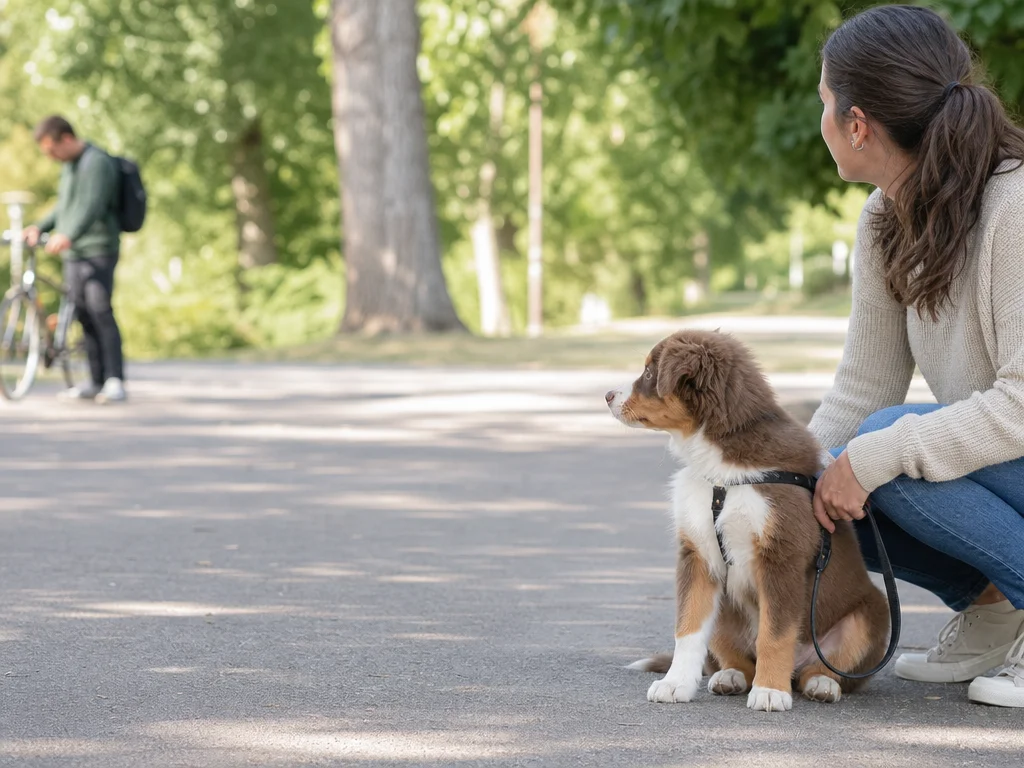
Puppy socialization is not a contest to meet the most dogs, greet the most strangers, or visit the busiest place possible. It is the gradual process of helping a puppy learn that ordinary people, sounds, surfaces, handling, places, and well-managed interactions can be safe. A puppy who watches a bicycle from a comfortable distance and eats a treat may be learning more than a puppy carried into a crowd.
The UC Davis School of Veterinary Medicine describes an important early development period of roughly 3 to 14 weeks, while also emphasizing positive, controlled experiences. That timing can feel urgent, but urgency should never turn into flooding. Your vet can help you weigh local disease risk and the safest options for your puppy before vaccines are complete.
Start here: Choose one ordinary experience your puppy can observe comfortably for a minute or two: a person at a distance, the sound of a washing machine, a new floor texture, or a calm car ride. Pair calm observation with something your puppy enjoys, then leave before they are overwhelmed.
What socialization includes
Think beyond people and dogs. A puppy will live among doors opening, delivery trucks, umbrellas, hats, buses, grooming tools, visitors, household appliances, different floors, car rides, veterinary handling, and quiet time alone. The goal is not to make every puppy love every situation. It is to build familiarity and trust so new things are less likely to feel alarming.
Useful categories include:
- calm adults, children who can follow instructions, and people using mobility aids or carrying unusual objects;
- friendly, healthy dogs whose play style and vaccination status are appropriate for the situation;
- everyday sounds such as traffic, kitchen noises, lawn equipment at a distance, and recorded sounds played quietly;
- surfaces such as grass, carpet, tile, gravel, and a stable low step;
- gentle handling of paws, ears, collar area, and mouth only while the puppy is comfortable;
- short car rides, calm waiting areas, and other practical places your puppy may need to visit.
You do not need to check every item in one week. Repetition of a few easy experiences is often more useful than collecting new ones faster than a puppy can recover.
Let your puppy’s body language set the pace
Look for a loose body, normal breathing, curiosity, a willingness to take food, and the ability to notice something new without becoming stuck on it. A puppy may pause or move closer to you briefly; that is not automatically a problem. Give them room to observe and choose whether to continue.
Slow down when you see repeated lip licking, yawning unrelated to sleep, a tucked tail, ears held back, shaking, freezing, frantic pulling away, refusal of food they normally enjoy, or attempts to hide. These signs do not diagnose fear on their own, but they can mean the experience is too much right now. Create distance, stop the activity, and return to something easier. Do not hold a puppy in place so someone can greet them.
The right amount of exposure is the amount your puppy can process comfortably. A short walk past a school at a quiet time may be a better first step than standing at the gate when children are pouring out.
Use the “look, treat, leave” pattern
When your puppy notices something new, allow them to look. If they remain comfortable, offer a small treat or begin a gentle game. Then move away before the puppy needs to escape. This pattern teaches that new things can predict good outcomes and that you will listen when the puppy needs space.
Keep the experience brief. If your puppy is staring, pulling, vocalizing, or unable to eat, you may be too close or have stayed too long. Distance is a tool, not a setback. Cross the street, step behind a parked car, watch from the edge of a park, or simply go home.
Avoid using corrections, lead jerks, forced greetings, or frightening exposures to make a puppy “get used to it.” The AVSAB recommends reward-based methods and advises against aversive training methods.
People and dog interactions need choice
Tell visitors to ignore the puppy at first. They can sit sideways, avoid reaching over the puppy’s head, and toss a treat away from themselves. If the puppy chooses to approach, the visitor can offer a calm hand low and still. If the puppy steps back, everyone should let that choice stand.
For other dogs, select calm, social dogs and keep the meeting brief. Parallel walking at a distance can be easier than face-to-face greetings. Watch for loose movement and pauses. Separate before play becomes too intense, before one puppy is repeatedly chased, or when either dog tries to leave. Dog parks and uncontrolled greetings are not essential socialization experiences.
Build handling into ordinary life
Socialization also includes consent-based handling. When your puppy is relaxed, touch a shoulder, then offer a treat. On another easy moment, gently lift a paw for a second, reward, and stop. Let the puppy walk away if they want to. These tiny practices can make future grooming and veterinary care less surprising.
Our What Should I Train My Puppy First? tool can help you choose a general foundation to focus on. Use it as a starting point, not as a replacement for watching your puppy’s comfort and consulting your vet.
Safety before vaccines are complete
Socialization does not require taking a puppy everywhere or exposing them to unknown dogs. Ask your vet about disease risk where you live and which environments are appropriate at your puppy’s current vaccination stage. In the meantime, there may be lower-risk ways to experience the world: carrying your puppy where safe, sitting on a clean blanket, watching from a car, meeting known healthy dogs in a controlled setting, or practicing sounds and handling at home.
The details matter locally. A puppy’s age, health, vaccine history, and the prevalence of disease in the area change the safest choice. General online advice cannot make that decision for an individual puppy.
Keep a tiny, flexible checklist
Rather than aiming for a long tally, choose a few categories to revisit gently: people, sounds, places, surfaces, handling, and calm dogs. Notice what your puppy found easy and what felt hard. Repeat an easy exposure once or twice before adding something more challenging.
Good progress can look quiet: your puppy notices a truck and then sniffs the grass again; accepts a brief paw touch; watches a person with a hat without retreating; or rests beside you at a café patio far from the main path. These are real learning moments, even if no one else notices them.
When to get professional help
Speak with your vet or a qualified reward-based behaviour professional if your puppy is persistently fearful, cannot recover after ordinary exposures, is freezing or trying to escape, is growling or biting in a way that worries you, or seems increasingly distressed by people, dogs, handling, or the environment. Do not keep repeating the feared situation to “prove” that it is safe.
Also contact your vet before following a socialization suggestion that could conflict with your puppy’s health needs, vaccine status, or local disease risk. A careful pace protects both physical health and emotional learning.
Sources and further reading
- UC Davis: Puppy socialization — early development timing, positive exposure, and stress signals.
- AAHA: What to do when you first bring home a new puppy — safe, gradual early experiences and veterinary guidance.
- AVSAB: Humane dog training position statement — reward-based methods and avoidance of aversive training.
keep learning with Pawaily ♡
Get practical pet guidance
Short, evidence-informed ideas for learning, health, grooming, nutrition, and everyday care.