
Start with comfort, not a complete groom
Home grooming is less about finishing every task on the first day and more about helping a puppy learn that calm handling can be safe and worthwhile. Brushing, looking at paws, lifting an ear flap, or standing on a towel can all be new experiences. A puppy who can opt in gradually is more likely to stay relaxed with you, a future groomer, and their veterinary team.
Choose a quiet time when your puppy has recently had a toilet break and is not in the middle of exciting play. Use a non-slip spot on the floor rather than lifting a puppy onto furniture or a table. Keep the first practice so short that it feels almost unfinished. The American Kennel Club recommends short sessions, high-value rewards, and stopping on a positive note; a few brush strokes can be plenty.
This guide is a gentle starting routine, not a substitute for a groomer’s coat-specific plan or veterinary advice. If you adopted an older dog, begin at the same low-pressure first step and let their response set the pace.
Set up a simple, safe space
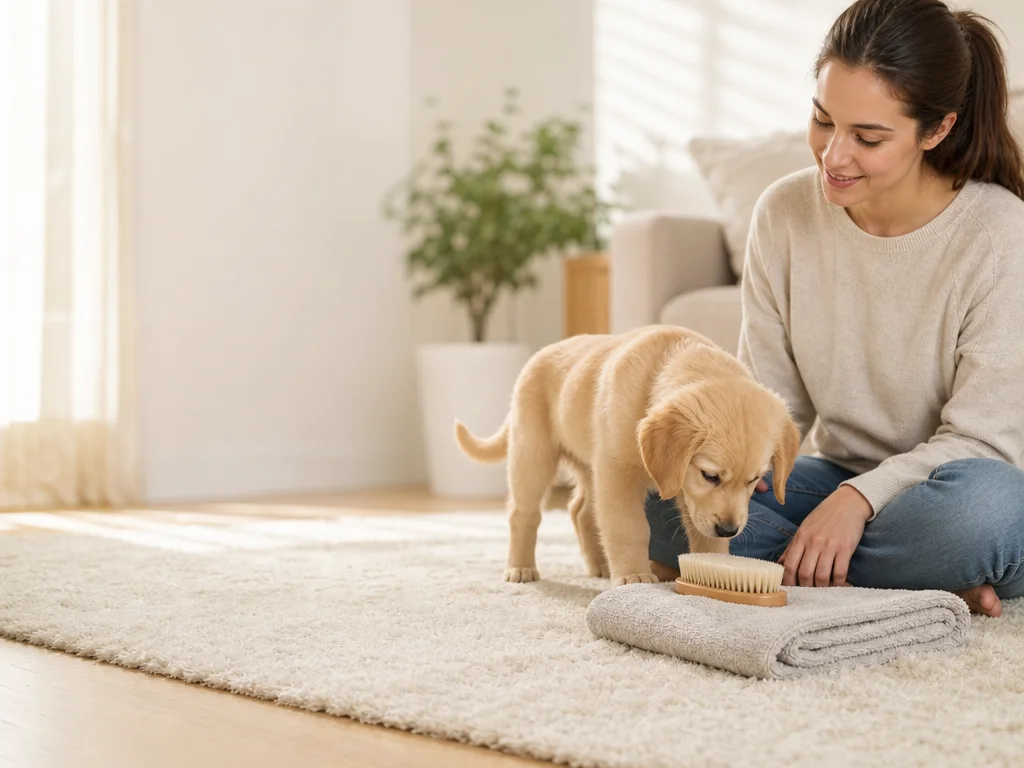
Before inviting your puppy over, place a soft towel or non-slip mat on the floor and have a small dish of treats ready. Choose one clean, dog-appropriate brush that suits the puppy’s coat or that a groomer has suggested. You do not need a collection of tools to begin. The useful question is whether the brush can touch the coat lightly and comfortably.
Let your puppy see and sniff the brush. Put it down within reach, then reward calm investigation. Do not wave it toward their face or follow them with it. If your puppy walks away, allow that choice. Wait, make the brush less prominent, or try another short session later. A puppy who returns voluntarily is giving you more useful information than one who has been held still.
Keep scissors, clippers, nail tools, and strong-smelling products out of this first routine. These can be introduced separately, in tiny steps, with guidance from a qualified groomer or veterinarian when needed. Never leave a puppy unattended on an elevated grooming surface, even briefly.
The calm first-groom checklist
Use this sequence over several short sessions. Move on only while your puppy remains comfortable; there is no prize for reaching the last item today.
- Invite, do not chase. Sit near the towel, let your puppy approach, and offer a small reward for choosing to be there.
- Practice a brief touch. Gently touch a shoulder or side, then give a reward and remove your hand. Repeat only if your puppy stays loose and interested.
- Show the brush. Let your puppy sniff it again, reward, and move it away.
- Try one easy stroke. Brush an uncomplicated area such as the shoulder with light pressure, then immediately reward. Pause before offering another stroke.
- Add small handling moments. On later sessions, briefly touch a paw, lift an ear flap, or look at the tail area, pairing each moment with something your puppy enjoys.
- Finish early. Put the brush away while the puppy is still comfortable. A cheerful end is part of the lesson.
The PetMD puppy grooming guide similarly advises frequent sessions lasting less than five minutes and building tolerance for the nose, ears, belly, and feet. Think of those areas as separate learning projects, not a checklist that must be completed in one sitting.
Read your puppy’s answer
Comfort can look like a soft body, normal breathing, a willingness to take a treat, or choosing to come back after a pause. These are invitations to continue gently, not a reason to speed up. Give the puppy breaks between strokes and keep your movements predictable.
Slow down if your puppy turns their head away, repeatedly steps off the towel, freezes, tucks their tail, licks their lips, or stops taking treats. Those signals do not mean your puppy is being difficult. They mean the current step may be too much, too long, or too unfamiliar. Stop the handling, let the puppy reset, and return next time to an easier version: perhaps just seeing the brush, then earning a treat.
Avoid pinning a puppy, gripping a leg, or insisting that they “get used to it.” Forcing contact can make the next session harder and can create a safety problem if a frightened puppy struggles. Blue Cross recommends gentle, gradual brushing with rewards when a dog is uneasy. Your aim is cooperative care, built one comfortable repetition at a time.
Make brushing a routine, not a wrestling match
Once one brush stroke is easy, add another on a different day. Stay with areas your puppy accepts before working near the legs, belly, tail, or face. The exact brushing frequency and technique depend on an individual dog’s coat, lifestyle, and any grooming plan already recommended by a professional. Ask a groomer which brush and schedule fit your puppy instead of copying a routine from a dog with a very different coat.
Keep the reward connected to the experience: a treat after a calm stroke, quiet praise, or a chance to return to a favorite activity. Food is optional if it does not suit your puppy; the important part is that the puppy experiences handling as predictable and positive. If your puppy loses interest, stop before trying to persuade them back.
Baths, drying, nail trimming, and haircuts deserve their own gradual introductions. For a first home routine, it is enough to help your puppy stand on a towel, hear the bathroom door close, or see a dryer from a distance while receiving a reward. Do not rush from a successful brush introduction into a full bath. Separating the skills keeps each one understandable.
When a professional groomer can help
A qualified groomer can show you a coat-appropriate brush, demonstrate low-stress handling, and take on tasks you do not feel safe doing at home. They may also be the more suitable choice when a puppy needs a trim, when the coat is becoming tangled, or when the puppy finds a particular procedure worrying. Tell the groomer honestly what your puppy has practiced and what makes them pause, so the appointment can start at the right level.
Before booking, ask your veterinarian about local grooming and vaccination considerations for your puppy. PetMD notes that an early, positive professional visit can be useful, while timing depends on the puppy’s health and vaccination plan. A good first appointment may be brief and focused on confidence rather than a perfect finish.
When to get professional help
Contact your veterinarian if you notice a new skin change, unusual odor, persistent scratching, painful-looking response to touch, discharge from the ears or eyes, or any other change that concerns you. Do not try to work around a possible health issue with more brushing, bathing, or products at home. Your veterinary team can decide what assessment or care is appropriate.
Ask a qualified groomer for help rather than cutting or pulling through a tangled coat, especially near the skin. If your puppy becomes increasingly fearful, growls, snaps, or cannot be handled safely, pause grooming and speak with your veterinarian. They can help you decide whether a veterinary assessment, an experienced groomer, or a qualified reward-based behavior professional is the right next support. The RSPCA also emphasizes regular grooming and getting professional advice when you are unsure.
Sources and further reading
- PetMD: Puppy Grooming Guide: How and When To Groom a Puppy — veterinarian-reviewed guidance on gentle early handling and professional grooming visits.
- American Kennel Club: Setting Puppies up for Success: Handling and Grooming — short, reward-based introductions to grooming tools and handling.
- Blue Cross: How to groom your dog — welfare guidance on gradual brushing and positive rewards.
- RSPCA: Grooming your dog — animal-welfare information on grooming and seeking advice.
keep learning with Pawaily ♡
Get practical pet guidance
Short, evidence-informed ideas for learning, health, grooming, nutrition, and everyday care.