
The short answer: there is no one puppy-bath calendar
Most puppies do not need a bath because a certain number of days has passed. A more useful question is whether your puppy is genuinely dirty, smells unpleasant, has rolled in something messy, or needs a rinse after a particular adventure. The VCA grooming guide describes bathing as occasional care for many dogs and notes that age, lifestyle, haircoat type, and health all change the answer. That is why two happy puppies can need very different routines.
For a puppy, bathing is also a learning experience. The sound of running water, a slippery surface, being towel-dried, and the scent of shampoo can all feel new. A calm, brief introduction is more valuable than trying to create a perfect bath schedule. If your puppy is clean and comfortable, practice handling and brushing separately; save a full bath for when it is useful.
This guide is everyday education, not a plan for a skin or coat concern. If a veterinarian has already given you bathing instructions, that advice comes first. Do not copy a medicated, frequent, or special-product routine from another dog.
What changes the answer for your puppy
Start with the coat. A fluffy, long, curly, double, or non-shedding coat may have grooming needs that differ from a short, smooth coat. Brushing can remove loose dirt and help you notice what is in the coat without automatically adding a bath. A groomer can explain which brush and routine fit your puppy’s coat, especially as the adult coat begins to arrive.
Then consider the day your puppy had. A house-training accident, a muddy walk, a swim in dirty water, or an encounter with something smelly may make a bath sensible right away. On a quiet week indoors, the same puppy may not need one. The VCA healthy coat guide gives similar examples and cautions that frequent bathing needs individual veterinary guidance.
Finally, consider comfort and professional advice. Puppies with a history of sensitive skin, a prescribed product, or a new change in their coat should not be put on an internet schedule. A veterinarian can tell you whether bathing is appropriate and what product, timing, or next step is suitable. The goal at home is gentle cleanliness, not trying to solve a health problem with more baths.
Make the first bath mostly preparation
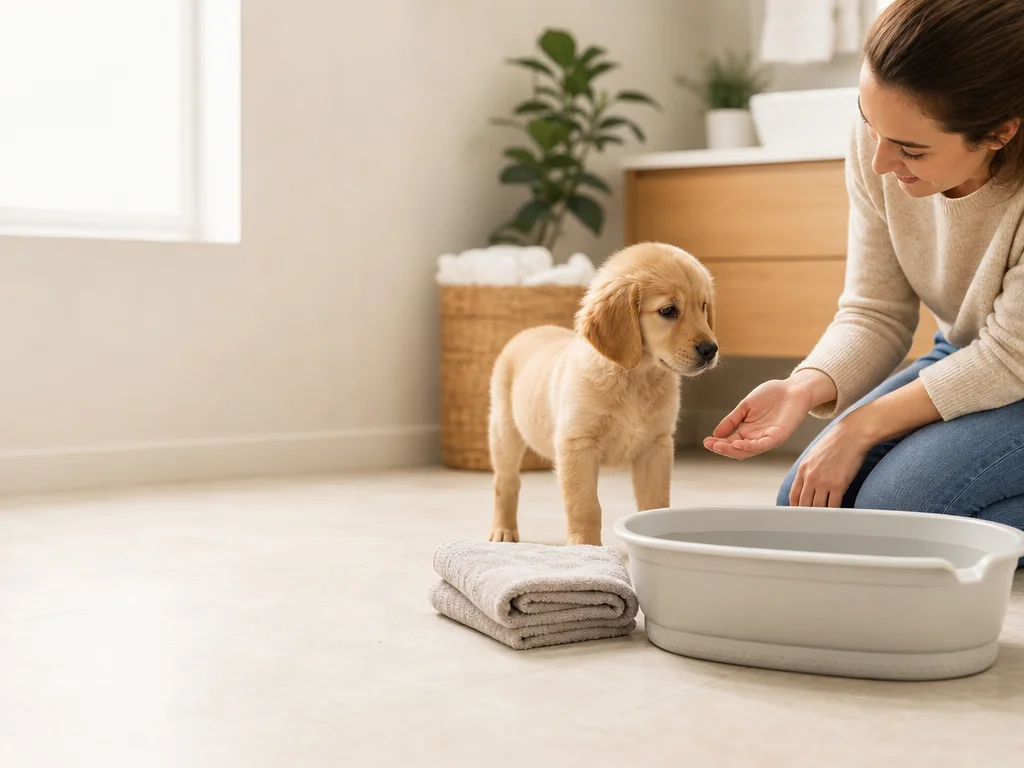
Choose a warm, unhurried time after a toilet break, not when your puppy is overtired or racing around the house. Put a non-slip mat or folded towel on the floor of a shallow tub, sink, or bathing area that is safe for your puppy’s size. Have several small treats, a towel, a cup or gentle sprayer, and dog shampoo ready before inviting the puppy in. Never leave a puppy alone near water, even for a moment.
For the first few sessions, you may not use water at all. Let your puppy walk onto the dry towel, sniff the empty bathing space, and step away if they choose. Offer a treat for calm investigation. On another day, turn the water on briefly at a distance, reward, then turn it off. These small rehearsals make the real bath less surprising.
Avoid holding a puppy in place, lifting them onto a high surface, or pursuing them with a wet towel. If they move away, pause. Make the next step easier: more distance from the tap, less noise, or simply a treat beside the towel. A bath that ends early while your puppy is still comfortable gives you a much better starting point next time.
A simple, low-pressure bath routine
When a bath is needed and your puppy is reasonably comfortable with the setup, keep the process plain and brief.
- Brush out loose dirt and check for tangles before water. The VCA grooming guide notes that tangles can become much harder to remove after bathing.
- Use comfortably warm water, applied slowly away from the face. Let your puppy hear and feel a small amount before continuing.
- Choose a shampoo made for dogs and use it only as directed. Human shampoo, including baby shampoo, is not a substitute for dog shampoo; dog skin and human skin have different needs.
- Keep shampoo and water out of the eyes, nose, ears, and mouth. Do not force a face wash; a damp cloth used gently around the outside can be enough for a messy chin.
- Rinse patiently so product is not left in the coat, then wrap the puppy in a towel and dry in a warm, draft-free place.
- End with something your puppy enjoys: a treat, quiet praise, or a chance to settle on a familiar bed.
One calm rinse and towel dry is a useful success. You do not need to add nail trimming, ear cleaning, a loud dryer, or a complicated groom to the same session. Those are separate skills that deserve their own gradual practice.
Between baths, keep care simple
Regular gentle brushing, wiping muddy paws with a clean damp cloth when needed, and checking the coat after outdoor play can reduce the need for unnecessary full baths. The Blue Cross recommends regular grooming and gradual, reward-based introductions to handling. Use those moments to notice burrs, leaves, or a tangle before they become harder to manage.
Do not cut a mat close to the skin with scissors. Ask a qualified groomer for help with a tangled coat, and tell them how much handling your puppy has practiced. A professional can also help you choose an appropriate brush and show you a safe, low-stress bathing setup. The RSPCA advises seeking professional guidance when you are unsure about grooming.
Bath frequency can change as a puppy grows, changes coat, starts daycare, enjoys swimming, or moves through muddy seasons. Let the routine stay flexible. There is no benefit in bathing solely because a calendar date says it is time.
When to get professional help
Contact your veterinarian if you notice persistent scratching, new redness, flaking, sore-looking areas, hair loss, discharge, a strong or unusual odor, pain when touched, or any change that concerns you. Do not try to diagnose the cause or treat it with extra baths, home mixtures, or a medicated shampoo chosen without veterinary direction. Bring the product names you have used so the veterinary team has a clear picture.
Ask a qualified groomer for help if the coat is tangled, your puppy needs a coat-specific service, or you cannot manage the bathing process safely. If your puppy freezes, repeatedly tries to escape, growls, snaps, or becomes more worried with practice, stop the session. Speak with your veterinarian about the safest next support; they may recommend an assessment, an experienced groomer, or a qualified reward-based behavior professional.
Sources and further reading
- VCA Animal Hospitals: Grooming and Coat Care for Your Dog — veterinary guidance on coat care, bathing variables, and tangles.
- VCA Animal Hospitals: Coat and Skin Appearance in the Healthy Dog — veterinary guidance on dog-safe shampoo and reasons bathing needs vary.
- Blue Cross: How to groom your dog — welfare-focused advice on gradual, positive grooming.
- RSPCA: Grooming your dog — animal-welfare information on routine grooming and professional advice.
keep learning with Pawaily ♡
Get practical pet guidance
Short, evidence-informed ideas for learning, health, grooming, nutrition, and everyday care.