
The short answer
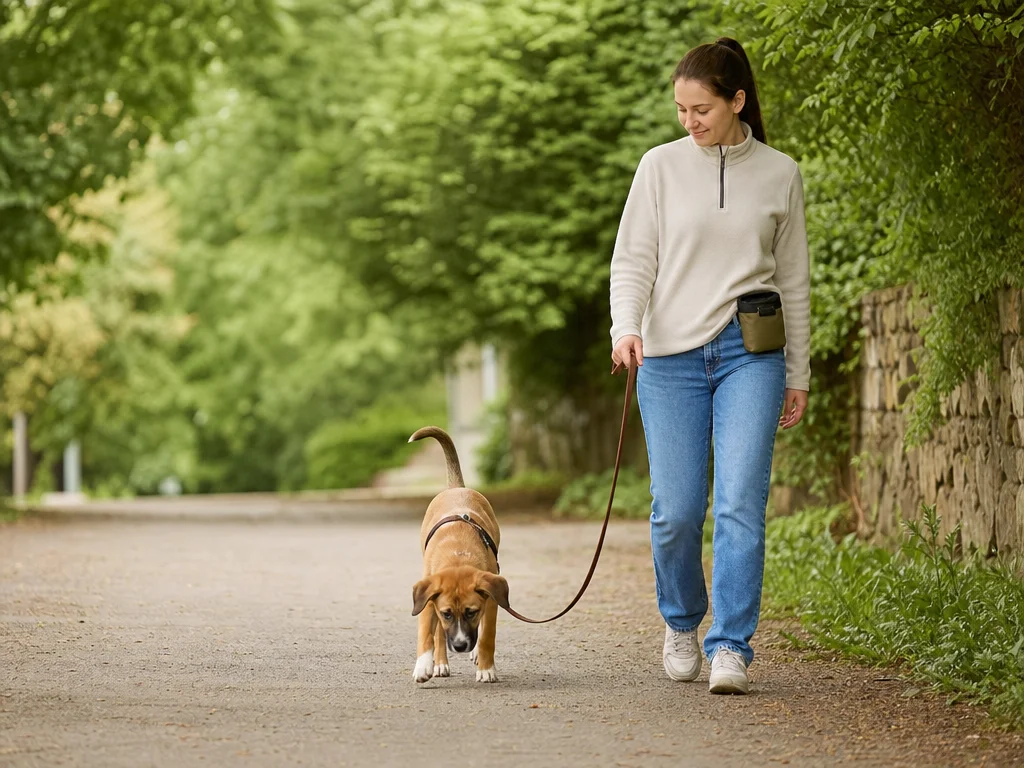
Loose-lead walking means your dog can move with you while the lead has slack, rather than staying tight and pulling either of you forward. It is not the same as a competition heel. A puppy can sniff, look around, and walk on either side of you while still learning that checking in and keeping the lead loose are worthwhile choices.
The clearest first lesson happens before a busy walk. Help your puppy feel comfortable wearing their equipment, reward attention near you, and start in a quiet place where the world is not asking for all of their focus. The American Kennel Club's lead-training guide describes beginning with equipment comfort and rewarding a puppy for staying close before adding more difficult outdoor distractions.
Start here: Choose a calm, safe area and bring small rewards. Aim for one or two relaxed steps together, not an entire polished walk.
Decide what “walking together” looks like
Many people picture a dog walking in one exact position. For ordinary outings, a more useful picture is simpler: the lead hangs in a soft curve, your puppy is not dragging towards something, and both of you can move without strain. Your puppy may walk slightly ahead, beside you, or switch sides. The important part is that the lead does not stay tight.
Choose equipment that is comfortable, correctly fitted, and appropriate for your dog's size and body. Check it before each outing and ask a qualified professional for fitting help if you are uncertain. No collar, harness, or lead can teach the behaviour by itself. The learning comes from the clear, repeated connection between a loose lead, attention, and something your puppy values.
Avoid equipment or handling that relies on pain, fear, or force. The AVSAB humane dog training statement recommends reward-based methods for dog training and behaviour concerns. If a walk feels like a struggle, making the setup easier is more useful than escalating the pressure.
Begin before you leave the house
Let your puppy see the harness and lead in a calm place. Offer a treat or quiet praise when they approach it voluntarily. Build up to putting equipment on briefly, rewarding, and taking it off again. If your puppy freezes, scratches at the harness, mouths the lead, or tries to escape, slow down. The first goal is comfort, not getting outside quickly.
With the lead attached, wait for a small glance towards you. Mark that moment with a word such as “yes” if you use one, then reward. You are teaching your puppy that paying attention to you can be useful even when nothing exciting is happening. A few easy check-ins indoors or in a quiet garden are meaningful practice.
Do not pull your puppy towards you to create a check-in. Move a step away, make yourself easy to follow, or wait for the look you want. When the puppy chooses to come near you, reward close to your leg so the location is clear.
Add a few loose-lead steps
Take one step. If the lead remains slack and your puppy is with you, mark and reward. Then take another. Rewards can come often at the beginning because you are explaining a brand-new game. A puppy who gets paid for staying near you is more likely to offer it again.
If the lead tightens, pause rather than continuing to pull against your puppy. Wait for a little slack, a look back, or a step towards you, then reward and move on. The AKC's guide to lead pulling explains that moving forward while a dog pulls can make pulling effective, while waiting for a loose lead helps clarify the alternative.
There is no need to turn around sharply, scold, or yank the lead. If your puppy cannot create slack in that moment, the setting may simply be too stimulating. Increase distance from the distraction, go back to an easier spot, or finish the outing with calm management.
Let sniffing be part of the reward
Sniffing is a normal and valuable part of a dog's walk. You do not need to choose between a perfect training exercise and letting your puppy explore. In a safe place, a few loose-lead steps can lead to a sniff break. Calling your puppy to you, rewarding, and then releasing them to investigate can make checking in more appealing.
Use a short, predictable phrase for moving together if it helps your household, such as “let's go.” Say it as you start moving, then reward the puppy for coming along with a loose lead. Keep the cue friendly and clear. Do not keep repeating it when your puppy is too distracted to respond.
Our recall guide explains how to build a happy return in small steps. A puppy who learns that turning towards you has good outcomes will often find early walking practice easier too.
Take the lesson outside gradually
Outside adds smells, movement, people, dogs, traffic, and unfamiliar sounds. A puppy who can walk beautifully across a kitchen may need much easier expectations on the pavement. Start with a quiet time and short distance from home. Reward frequently for a loose lead and any voluntary check-in.
If your puppy is worried, overexcited, or unable to take food, they may not be in a good learning state. Create more distance, choose a quieter route, or go home. Our puppy socialization checklist has more on letting a puppy observe new things from a comfortable distance rather than treating every outing as a greeting opportunity.
Keep young puppies safe from heat, unsafe surfaces, traffic, and local disease risks. Ask your vet about appropriate outings for your puppy's age, health, and vaccination status. Loose-lead training can begin in safe indoor or private areas while you work out what public settings are appropriate.
What progress can look like
Progress may be two relaxed steps near the front door, a puppy who looks back after reaching the end of the lead, or a short quiet walk with several sniff breaks. It is not measured by distance alone. If the lead stays loose more often and your puppy recovers more easily from a distraction, the lesson is becoming clearer.
Try not to compare your puppy to another dog on the same path. Age, experience, body comfort, environment, and individual temperament all affect what feels manageable. Keeping practice easy enough for success builds a more useful habit than trying to “wear out” a puppy on an overwhelming outing.
When to get professional help
Contact a vet if pulling or reluctance to walk begins suddenly, if your dog appears painful, limps, coughs, seems short of breath, or shows another physical change. Ask a qualified reward-based trainer or behaviour professional for help if walks involve panic, repeated lunging, growling, snapping, fear of people or dogs, or a safety concern for you or others.
Do not force your dog past a trigger or use a painful tool to suppress their response. A careful assessment can help you choose a safer starting point.
Sources and further reading
- American Kennel Club: Lead training for dogs and puppies — equipment comfort, attention, and early loose-lead practice.
- American Kennel Club: How to stop your dog from pulling on lead — making a loose lead, rather than pulling, the way to move forward.
- AVSAB: Humane dog training position statement — evidence-based reward training guidance.
keep learning with Pawaily ♡
Get practical pet guidance
Short, evidence-informed ideas for learning, health, grooming, nutrition, and everyday care.