
The short answer
The first week is not the time to teach every cue, meet every neighbor, or decide that a puppy’s first difficult night predicts the future. Your puppy has left familiar smells, sounds, people, and littermates. A calm setup, frequent chances to toilet, generous rest, and gentle observation are more useful than a packed introduction to their new life.
The goal is simple: help your puppy feel safe enough to eat, sleep, relieve themselves, and begin learning that their new people are predictable. The American Animal Hospital Association recommends preparation, positive reinforcement, and keeping early experiences manageable. That is a much kinder target than expecting confidence on day one.
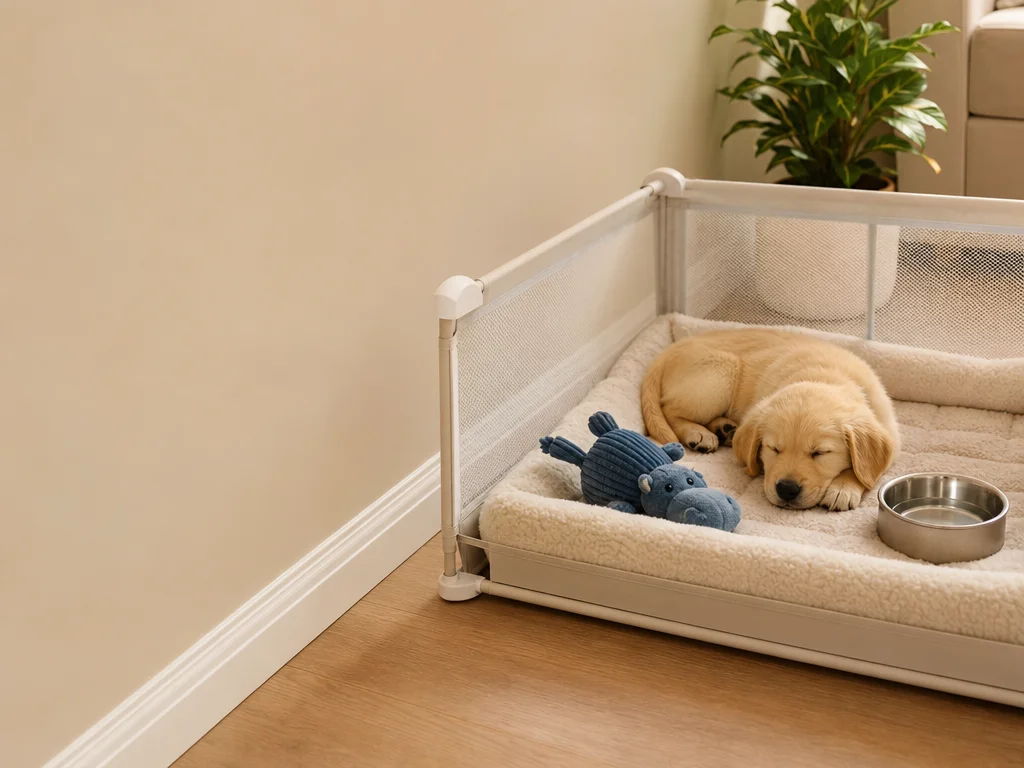
Start here: Choose one puppy-safe area, remove hazards, set out water, arrange a comfortable resting place, and decide who will handle meals, toilet trips, and quiet time. Keep the first arrival low-key.
Before your puppy arrives
Puppies explore with their mouths and have little sense of what is valuable or dangerous. Put medicines, food, cleaning products, electrical cords, small objects, and anything chewable out of reach. Use a gate, pen, or closed door to make supervision realistic. A smaller, prepared space is easier than repeatedly saying no in a house full of tempting objects.
Gather only the basics: food the puppy has already been eating unless your veterinarian advises a change, water, suitable bowls, a collar or harness and lead, a way to identify them, bedding, a few size-appropriate toys, and cleaning supplies for accidents. Ask the shelter, rescue, or breeder for every health and feeding record they can provide. Keep those records in one place for the first veterinary visit.
Agree on household rules before the puppy walks in. Where may they sleep? Which rooms are off limits? Who takes them out? What words will everyone use for toilet trips and recalls? Consistency does not mean a rigid household; it means the puppy is not asked to decode a different rule from every person.
Make the first day smaller than you think
Your puppy does not need a welcome party. Limit visitors, keep introductions brief, and let the puppy approach at their own pace. Sit nearby, offer a treat if they are comfortable taking one, and allow sniffing and exploring without constant handling. A puppy who hangs back is not failing; they may simply need time.
Offer regular toilet opportunities: after waking, eating, drinking, play, and a change of activity. Go to the same practical location, wait quietly, and reward after the puppy finishes. Accidents are information, not misbehavior. Clean them without scolding, then make the next opportunity easier to notice. Our puppy potty tool can give a general starting range, but your puppy’s actual needs and health matter more than any formula.
Keep food familiar for the first few days unless a veterinary professional tells you otherwise. Sudden food changes, stress, excitement, parasites, and illness can all affect digestion. Fresh water should be available; do not restrict water to try to prevent accidents.
Let rest do some of the work
Puppies often need far more sleep than new caregivers expect. An overtired puppy can look busy, bitey, noisy, or unable to settle—not necessarily ready for another long walk or game. After a short play or learning moment, offer a quiet chance to rest in the puppy’s prepared space. You do not need to force sleep; reduce stimulation and make the resting area comfortable and safe.
Nighttime may be unfamiliar and emotional. Keep the sleeping setup close enough that you can notice a puppy who needs a toilet trip or is genuinely distressed. Respond calmly and keep overnight care boring: a quiet toilet opportunity, little conversation, then back to rest. For more on the difference between settling sounds and escalating distress, read Puppy crying in the crate at night?.
Teach through ordinary care
The first week can include tiny, positive learning moments. Say the puppy’s name once, reward a glance toward you, and then let them return to what they were doing. Toss a treat into the open crate or resting space without shutting the door. Briefly touch a shoulder or paw only while the puppy is relaxed, then reward and stop. The point is not to complete a training checklist. It is to show the puppy that people, handling, and rest can predict good things.
Avoid forcing interactions, using a crate as punishment, or overwhelming the puppy with exciting outings. Reward-based methods help a puppy learn what works without making people or new situations feel unsafe. The AVSAB position statement recommends humane, reward-based training rather than aversive methods.
If children live with or visit the puppy, give adults the job of supervision. Children can toss treats, sit calmly, and learn to step away when the puppy is sleeping, eating, chewing, or becoming too excited. No child should be asked to handle a frightened, biting, or distressed puppy.
Book the first veterinary visit
Arrange a veterinary visit promptly after bringing a puppy home, following the timing advised by the puppy’s source and your local practice. Bring every record you have, including prior vaccines, parasite treatment, feeding details, and any behavior or health observations. Your veterinarian can examine the puppy and advise on prevention, nutrition, local disease risks, activity, vaccination timing, and safe social experiences.
Write questions down as they occur. New caregivers often remember the most important question after leaving the appointment. It is reasonable to ask about appetite, stool, sleep, chewing, grooming, handling, behavior, and what changes deserve a call.
What progress looks like this week
Progress is not a puppy who performs on command for visitors. It may look like eating a meal, taking a nap near you, toileting outside once, choosing a toy over a hand, or recovering a little faster after a new sound. Some puppies arrive bold; others need more space. Both can be normal.
Keep notes only as needed for your veterinary appointment or your own memory: an appetite change, repeated loose stool, a new cough, a pattern around toilet trips, or a moment that frightened your puppy. Focus on patterns rather than judging one hard hour.
When to get professional help
Contact a veterinarian promptly if your puppy will not eat or drink, has repeated vomiting or diarrhea, seems unusually weak, has difficulty breathing, appears painful, has a swollen abdomen, repeatedly strains to urinate or defecate, or has another sudden health change. Young puppies can become unwell quickly.
Ask a veterinarian or qualified reward-based behavior professional for help if fear, panic, guarding, biting, or distress is escalating, if you cannot safely manage interactions, or if a puppy seems unable to settle even after their basic needs are met. Early support is not a failure; it is part of giving a new puppy a thoughtful start.
Sources and further reading
- AAHA: What to do when you first bring home a new puppy — preparation, early care, and humane crate introduction.
- AAHA: New dog checklist — home preparation, first-week priorities, and veterinary care.
- AVSAB: Humane dog training position statement — reward-based training guidance.
keep learning with Pawaily ♡
Get practical pet guidance
Short, evidence-informed ideas for learning, health, grooming, nutrition, and everyday care.