
The short answer
Young puppies often need at least one chance to go outside during the night, but there is no universal timetable that is right for every puppy. Age matters, yet so do the time of the last toilet trip, how deeply the puppy is sleeping, their health, recent accidents, and whether they can clearly signal that they need to go.
Some families find that a planned overnight trip prevents accidents during the first weeks. Others find that a comfortably sleeping puppy naturally wakes and signals when they need help. Use your puppy's observed pattern, keep the trip quiet, and ask your veterinarian for puppy-specific advice if you are unsure.
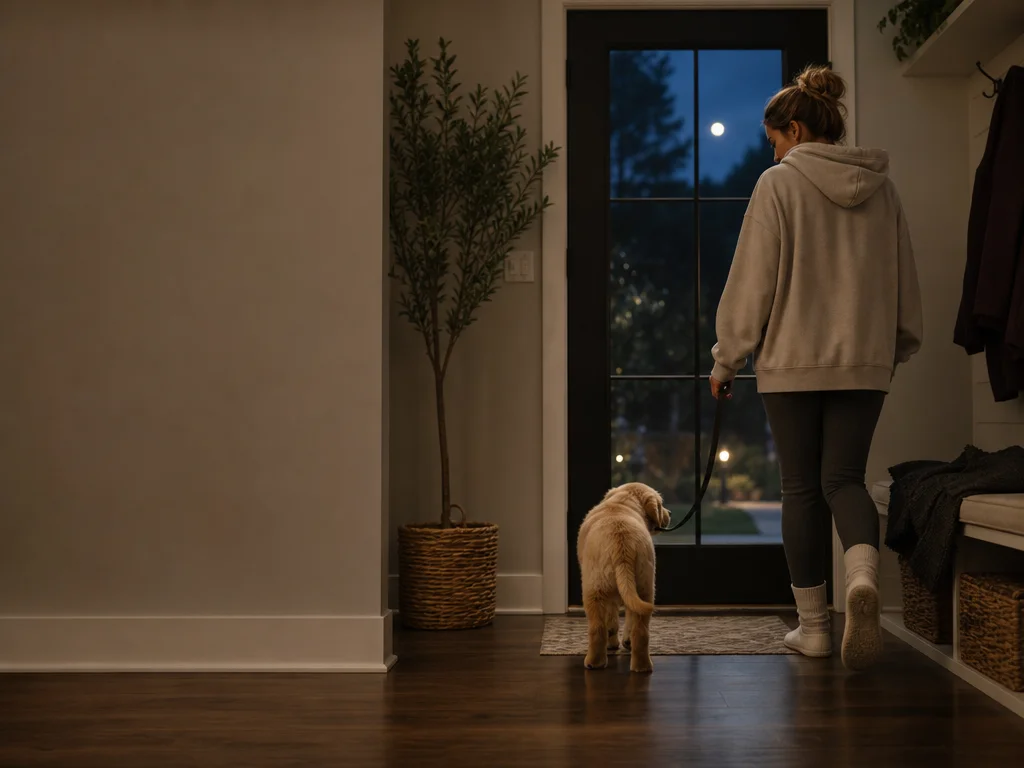
For tonight: Set up the lead, shoes, treats, and cleanup supplies before bed. If your puppy wakes and shows several toilet clues, take them calmly to their usual spot, reward toileting right away, and return indoors without turning the trip into playtime.
What changes a puppy's nighttime needs
A very young puppy has less bladder and bowel control than an older puppy, but age alone cannot tell you exactly when an individual puppy needs to go. Size, development, health, food and water intake, activity, and previous housetraining experience can all affect the pattern.
The most recent toilet opportunity matters too. A puppy who did not relieve themselves during the final calm trip may need another chance sooner. Exciting evening play can make it difficult to notice signals, while an overtired puppy may become restless or mouthy before settling. If evenings feel chaotic, our guide to puppy biting at night explains how tiredness and stimulation can show up.
Sleep state provides useful context. A puppy who is deeply asleep, breathing comfortably, and staying dry may not need to be woken at an arbitrary time. A puppy who wakes, becomes restless, and cannot resettle may be communicating a need. Recent accidents are information, not failure: they can show that the next opportunity should happen earlier.
Should you plan an overnight potty break?
A planned break can be useful for a newly arrived puppy who has had overnight accidents, is too young to signal reliably, or tends to wake around a fairly consistent time. Set the opportunity a little before the usual accident or unsettled period, then keep it calm and brief. This is temporary support while the puppy develops control and learns the route to the toilet area.
Do not rely on a rigid formula or wake a comfortable puppy simply because another puppy followed a different pattern. VCA Animal Hospitals recommends frequent opportunities at predictable transition points and careful supervision, while recognizing that puppies vary. Your veterinarian can help interpret what is reasonable for your puppy's age, health, and development.
If nighttime waking includes crying in a crate, first consider both toilet needs and emotional comfort. Our guide to puppy crying in the crate at night explains how to distinguish mild sounds from escalating distress and how to help a puppy resettle without making the wake-up exciting.
Signals that may mean your puppy needs to go
Look for a cluster of changes rather than treating one behavior as proof. Possible clues include:
- waking after a period of sleep and remaining alert;
- shifting repeatedly, pacing, or struggling to settle;
- sniffing the floor, circling, or moving toward the door or exit;
- repeated vocalization that is unusual for that puppy; and
- suddenly leaving a resting place or interrupting play to search.
A puppy might vocalize because they are lonely, uncomfortable, startled, or unwell. Sniffing can simply be exploration. Notice what happened beforehand and what usually follows. Over several nights, you may recognize your puppy's particular combination of signals without needing to turn every movement into a toilet trip.
A quiet nighttime potty trip
Preparation makes a sleepy response easier. Keep the lead, shoes, weather gear, small rewards, and cleanup supplies in one place. Use a safe, well-lit route and accompany your puppy; do not send a young puppy outdoors alone.
Take them directly to the usual toilet location. Keep your voice soft, movement slow, and attention on the task. Give them a brief, reasonable opportunity to sniff and relieve themselves without starting a game. When they finish, reward immediately at the spot so the connection is clear. Blue Cross and the RSPCA both emphasize rewarding the desired toileting behavior rather than reacting harshly to mistakes.
Return indoors and resettle in the same quiet way each time. Dim lights, minimal conversation, and no energetic play help preserve the difference between a necessary toilet trip and morning activity. If nothing happens, return calmly, supervise closely, and offer another opportunity if the signals continue.
If your puppy has an accident
Stay neutral. Move the puppy away from the area, clean thoroughly with a pet-safe enzymatic product, and avoid scolding or frightening them. A puppy does not connect a delayed reaction with an earlier accident, and fear can make them hide future toileting.
Think about the pattern instead. Did the puppy wake or become restless first? Was the final evening opportunity rushed? Did the accident occur earlier than usual? Use that information to offer the next opportunity sooner. Dogs Trust advises supervision, regular opportunities, reward for toileting in the right place, and calm cleanup when mistakes happen.
Keep fresh water available. Removing water simply to prevent overnight waking or accidents can create welfare and health concerns. If your puppy suddenly drinks much more than usual, that change belongs in a conversation with your veterinarian rather than a restriction at home.
Help nighttime habits improve
Make the final evening toilet opportunity unhurried and easy to reach. Reduce distracting play for a few minutes, accompany your puppy to the familiar location, and reward success there. Indoors, keep the sleeping area comfortable and close enough that you can notice meaningful waking or restlessness.
During the day, reward outdoor toileting immediately and give frequent opportunities around natural transitions such as waking, eating, drinking, and activity. This helps the puppy learn what the location means. At night, the goal is simpler: meet the genuine need with as little excitement as possible, then support a calm return to sleep.
What progress can look like
Progress is often gradual. Your puppy may sleep comfortably for longer stretches, signal more clearly, have fewer accidents, or settle more easily after a brief trip. One difficult night can follow a busy day, a change in food, unfamiliar surroundings, or normal development; it does not erase learning.
Pay attention to the overall direction while remaining responsive to sudden changes. As the puppy matures and stays dry, overnight opportunities may naturally become less frequent. Let comfort, dry nights, and veterinary guidance shape the transition instead of forcing a deadline.
When to get professional help
Contact your veterinarian if a previously dry puppy suddenly begins having accidents, drinks unusually large amounts, passes frequent small amounts of urine, appears painful, has blood in the urine, strains repeatedly, seems lethargic, or shows another health change. These signs need medical assessment rather than more housetraining practice. The Merck Veterinary Manual describes frequent or painful urination and blood in the urine among signs associated with urinary disease.
Seek urgent veterinary care if your puppy has difficulty passing urine or appears unable to urinate. If you are uncertain whether nighttime frequency is appropriate for your puppy, bring your observations to your veterinarian so they can consider age, development, diet, medications, and health together.
Sources and further reading
- VCA Animal Hospitals: Housetraining Your Puppy — veterinarian-authored guidance on supervision, timing, signals, and reward.
- Blue Cross: Toilet training a puppy — practical toilet opportunities, recognizing behavior, and positive reinforcement.
- RSPCA: Toilet training your dog — consistent opportunities, calm responses, and reward-based learning.
- Dogs Trust: Toileting in the house — supervision, accident cleanup, water access, and when to speak with a vet.
- Merck Veterinary Manual: Infectious Diseases of the Urinary System in Dogs — urinary warning signs that need veterinary assessment.
keep learning with Pawaily ♡
Get practical pet guidance
Short, evidence-informed ideas for learning, health, grooming, nutrition, and everyday care.