
The short answer
Puppies are not born knowing that a closed bathroom door, a trip to the mailbox, or a caregiver leaving for work is safe. Being alone is a skill they can learn through brief, calm repetitions. Start with an absence so small that your puppy can stay comfortable, then return without a big reunion. The early goal is not to test how long a puppy can endure; it is to build a history of separations that end before distress takes over.
The VCA guide to separation anxiety notes that puppies benefit from learning to spend time calmly in their own bed, crate, or safe area. That does not mean every cry should be ignored. A new puppy may need a toilet opportunity, may be frightened, or may be unwell. Read the puppy in front of you before deciding what to do next.
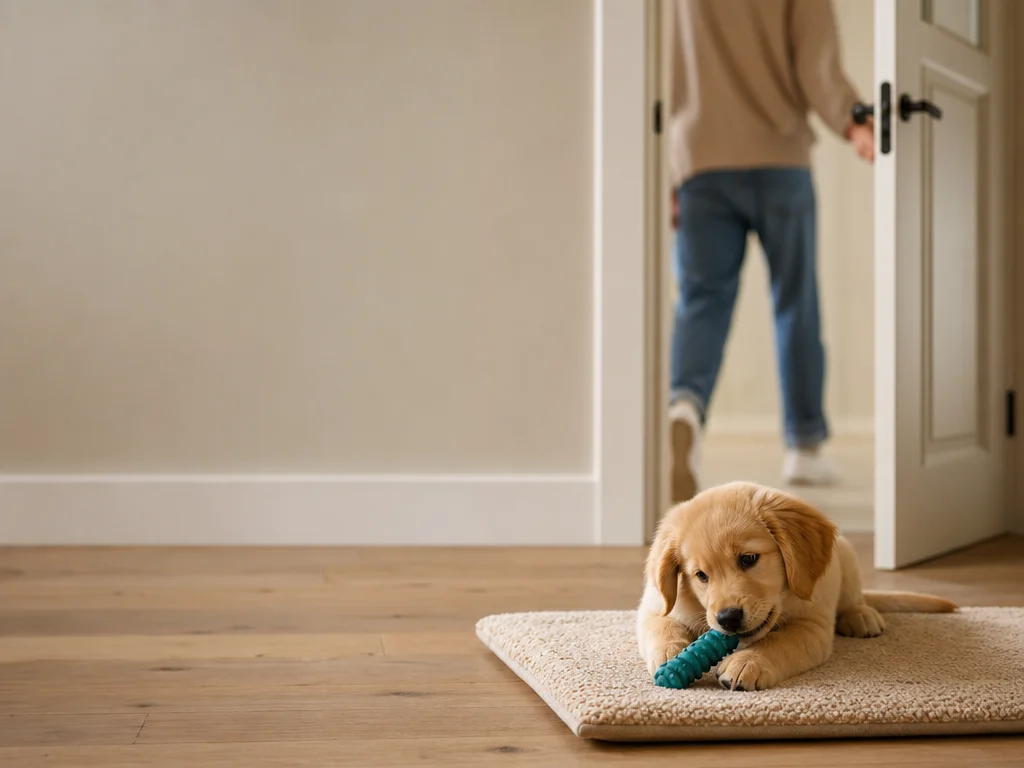
Start here: When your puppy is fed, has recently toileted, and is settled with a safe activity, stand up, take one step away, then return before they become worried. Repeat only while the puppy remains comfortable.
Set up for success first
Practice alone time after your puppy’s basic needs are met: a recent toilet opportunity, water, suitable rest, and a calm environment. Choose a puppy-safe space where you can prevent chewing hazards and where the puppy has previously had pleasant, low-pressure experiences. This can be an open crate, pen, gated room, or another safe area; the specific setup matters less than the puppy’s comfort in it.
Do not begin when you are already late for work, when the household is noisy, or immediately after exciting play. A puppy who is over-tired, needs to toilet, or is upset by the setup cannot show you what they can learn under easier conditions.
Offer a familiar, appropriate activity only if it is safe for your puppy to have while supervised or during the brief absence you are practicing. Follow product guidance and your veterinarian’s advice about chews and food toys. Never use an item that could create a choking or ingestion risk just to keep a puppy quiet.
Begin with tiny departures
Start with movements that normally predict leaving: picking up keys, putting on shoes, walking to another room, or touching the door. Do one small action, then sit back down. If your puppy stays relaxed, pair that calm moment with a treat, quiet praise, or the return of your attention.
Next, step behind a door for a second and return. You may stay inside the home at first. Increase only one element at a time: a little more distance, a slightly longer out-of-sight moment, or a quiet step outside. If the puppy begins to pace, bark, cry harder, scratch frantically, stop eating, or cannot settle, the step was too difficult. Make the next repetition easier.
Tiny practice can look unimpressive to a person, but it gives the puppy clear information: people leave, nothing frightening happens, and people return. Rushing from a few seconds to a long absence can turn the exercise into an endurance test instead of a learning experience.
Keep departures and returns ordinary
You do not need a dramatic goodbye. Calmly leave, then calmly return. If a puppy greets you with excitement, wait for a brief pause before offering attention when practical. The goal is not to punish a happy greeting; it is to make arrivals and departures predictable rather than emotionally huge.
Avoid sneaking away repeatedly if it makes you anxious or leaves the puppy without a clear pattern. It is more useful to build short, planned separations than to disappear for a long time without knowing whether the puppy can cope. If you need to be away longer than your puppy can manage, arrange appropriate care rather than trying to force a major leap in one day.
A crate is not the answer to every concern
A crate can be a useful safe space when introduced positively, but closing a puppy in a crate does not automatically teach them to be comfortable alone. Some puppies rest easily in a crate; others become more distressed when confined. Watch the puppy’s response instead of assuming the container is the lesson.
Keep the door open during early positive experiences when possible. Toss treats in, allow the puppy to come out, and build short rests before adding a closed door. Do not use the crate for punishment or leave a puppy to struggle through escalating panic. Our article Puppy crying in the crate at night? explains how to respond calmly when nighttime distress appears.
Notice normal protest and possible distress
Some puppies make a brief sound when a person leaves and then settle. Others may immediately pace, pant, drool, try to escape, destroy barriers, soil the area, or remain distressed for the whole absence. These signs can have several causes, including a need to toilet, discomfort, fear, insufficient rest, unfamiliar surroundings, or a separation-related problem. A video from a safe camera setup can help you see what happens after you leave, but it cannot diagnose the cause.
The Cornell College of Veterinary Medicine recommends gradual desensitization for separation anxiety and advises against harsh, punitive training methods. If distress is severe or consistent, do not keep increasing the time alone in hopes that the puppy will “learn to deal with it.”
Give everyone the same simple role
If multiple people care for the puppy, agree on the basic setup: where the puppy rests, what departure cue people use, how they respond to obvious distress, and who provides care when the household needs to be out. Consistent, small practice is easier when every caregiver understands that the goal is calm comfort, not silence at any cost.
This topic also connects to the first days at home. A puppy still learning the household and toilet routine may need more support than a puppy who has settled in. See Your puppy’s first week at home for a broader starting point.
When to get professional help
Contact a veterinarian promptly if a puppy’s distress is sudden, is accompanied by signs of illness or pain, or includes self-injury, repeated attempts to escape, heavy drooling, vomiting, or a marked change in appetite or energy. Health problems can affect behavior, so a veterinary assessment is an important first step when the change is significant.
Ask your veterinarian or a qualified reward-based behavior professional for support if your puppy cannot tolerate even very brief absences, becomes increasingly distressed, repeatedly damages barriers, soils only when left alone, or leaves you feeling unable to keep them safe. The ASPCA notes that separation-related problems may need very gradual, individualized behavior support.
Sources and further reading
- VCA: Separation anxiety in dogs — signs, prevention, and early alone-time learning.
- Cornell: Anxious behavior in dogs — gradual desensitization and humane behavior support.
- ASPCA: Separation anxiety — a careful overview of separation-related distress and gradual treatment.
keep learning with Pawaily ♡
Get practical pet guidance
Short, evidence-informed ideas for learning, health, grooming, nutrition, and everyday care.